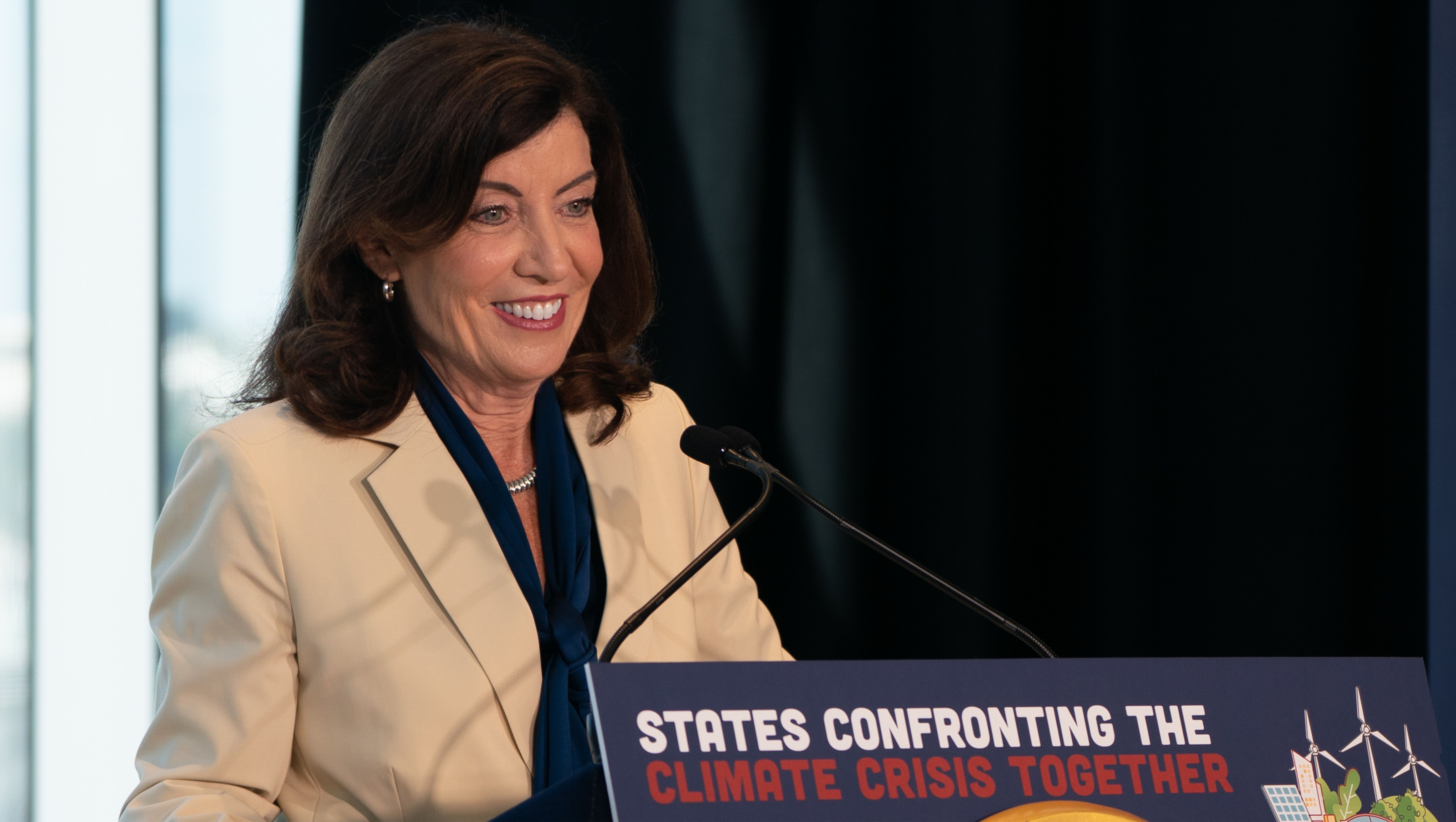
Governor Kathy Hochul announced today that New York State is taking actions in preparation of increased energy costs and supply problems expected this winter. The Public Service Commission has sent letters to Central Hudson, Orange and Rockland, and other utility companies with stern instructions.
Hochul directed State agencies to convene fuel providers across the state to ensure adequate heating fuels are available this winter. New Yorkers can also take advantage of cost-efficient programs in anticipation of the winter to adopt energy efficiency and electrification solutions for homes and businesses.
The global commodity costs of natural gas, heating oil, and propane have continued to rise, resulting in utility and heating cost increases, along with additional increases oil and gas prices.
“Just like the heat waves experienced earlier this summer, New Yorkers should be fully prepared this winter for rising global energy costs as temperatures drop and it takes more energy to heat their homes,” Governor Hochul said.
To worsen the looming problem, the Farmer’s Almanac is forecasting an unusually cold and snowy upcoming winter (story here) for the Northeast.
At Hochul’s direction, Public Service Commission Chair Rory M. Christian sent letters to the Chief Executive Officers of New York State’s largest utility companies, urging measures to mitigate the anticipated extreme commodity price increases over the winter and enhanced customer communications.
Christian is requiring that utilities enhance the reliability of the natural gas distribution systems during the upcoming winter heating season. Specifically, the state’s utilities — including Con Edison, Central Hudson, Orange and Rockland, National Grid, NYSEG, RG&E, National Fuel Gas, and PSEG-LI — must undertake the following actions, among others, to mitigate the impact of potential oil supply disruptions:
- Enhanced Communications: Utilities will immediately send letters to dual-fueled commercial customers, including interruptible customers, to advise them to fill their alternate fuel tanks now.
- Fuel Storage Inspections: Utilities will inspect the alternate fuel tanks of all dual-fuel customers where human needs are served (e.g. New York City Housing Authority housing, homeless shelters, schools, hospitals, etc.) by November 1 to ensure they have adequate supply on hand (full tanks or the equivalent of five days of supply) before the winter heating season begins.
- Alternative Supply Review: Utilities will review utility emergency plans to address alternate fuel supply disruptions during peak gas demand. If dual fuel customers cannot be served with natural gas and are unable to replenish alternate fuel supplies, the utility should be prepared to work with local and state government agencies to protect public health and safety when temperatures drop below 20 degrees. The plan should include the roles and responsibilities for setting up warming centers, providing hot meals, establishing lists of master plumbers in case pipes freeze in unheated buildings, and identify the company and other resources that might be needed.
- Enhanced Coordination: In the event of an oil supply disruption, electric generators may have more difficulty procuring No. 2 Oil than home heating customers. Utilities are required to continue to have strong coordination with the New York Independent System Operator and major power generators to encourage the dual-fuel operators to fill tanks in advance of the winter heating season.
PSC Chair Christian requested a response with recommendations for how each utility will execute on all of the actions by September 30, 2022.
“Global commodity prices are likely to stay inflated and rise during the winter heating season,” Christian explained. “It is therefore essential that utilities continue to have ongoing, robust communication with customers to help them access available assistance programs and be able to manage their energy costs. In preparation for this winter, utilities must also work with their “interruptible” customers, who by system design help to meet reliability needs during any periods of extreme cold weather by using alternate fuels.”
In addition, the New York State Department of Environmental Conservation issued an Enforcement Discretion letter to support efforts to address fuel supply and cost issues related to the a bioheating fuel law. Enacted in late 2021, the new law establishes minimum levels of biodiesel in all heating oil for use in buildings to reduce air pollution and greenhouse gases.
Hochul is also directing State agencies, including the New York State Energy Research and Development Authority, Department of Public Service, and Division of Homeland Security and Emergency Services, to meet with fuel providers to coordinate preparedness efforts ahead of the winter. State agencies will work closely with providers to ensure fuel supply inventories are brought up to appropriate level by the end of October in order to meet demand and minimize consumer concerns.
Doreen M. Harris, the President and CEO of the State Energy Research and Development Authority, said, “NYSERDA provides residents and businesses with a slate of options that can help save energy, reduce electric and heating bills, increase comfort during frigid temperatures. We encourage New Yorkers to take advantage of these programs now which can provide relief to some the state’s most underserved families during the times of the year when energy usage is at its highest.”
Daniel W. Tietz, the Commissioner of the State’s Office of Temporary and Disability Assistance, added, “The Home Energy Assistance Program is a lifeline to assist older adults, working families, and those struggling financially to cover higher home heating costs this winter.”
As energy prices rise during the winter months, New Yorkers can apply for the Home Energy Assistance Program, which can provide up to $976 to eligible homeowners and renters depending on income, household size, and how they heat their homes. To qualify, a family of four must have a maximum gross monthly income of $5,485, or an annual gross income of $65,829 or less. Applications will be accepted beginning November 1, 2022.